MERCOSUR Devastated: Venezuela threatens a TRIPLE ALLIANCE

The changes that Argentina is experiencing as of the new government and towards global reintegration furthering inter alia, the entrance of our country to the OECD, the Mercosur-Pacific Alliance treaties, the EFTA (European Free Trade Association) – Mercosur treaties and the Mercosur– European Union treaties, seem to progress on a plane of magnanimous wishes if we consider the current state of Mercosur.
The recent statements by President Maduro in national TV are clear evidence of this situation: “Venezuela will be respected; we hold the presidency of Mercosur and we are going to fully exercise such Powers, people from the Triple Alliance, and I’m calling the people to close ranks with the people of South America to defend the rights of the people of Venezuela… we are waiting for you here, we’re going to face you and we’re going to beat you, but you will not mess with Venezuela”.


Europe divided: Who is moving the piece?

Turkey has threatened to reintroduce the death penalty thereby jeopardizing its admission to the European Union (EU). Nice becomes the center of investigations due to terrorist attacks. The state of emergency is extended in France until January 2017. Germany suffers a tragic attack to passengers from the self-proclaimed Islamic State. The United Kingdom breaks-up with Europe. Everything points towards a new outbreak of nationalism supported in part by the series of migrations which have taken place during the last years. Furthermore, the economic crisis has opened a tense breach in terms of social tension between the underprivileged sectors and the middle class. It seems like the community institutionality model is not offering the expected results.
Apres le Brexit, que devrait faire l'Union Europeenne?

Introduction - After Brexit, what should the EU do?
Notwithstanding the dubious aspects of the referendum itself and its results (exclusion of UK expats, different vote in Scotland and Northern Ireland, polarisation between younger and older people, falsehoods being peddled during the referendum campaign), the decision to leave the EU seems to be irrevocable and impervious to second thoughts. Therefore the European Union should be prepared for a difficult negotiation which is likely to last two years at least. During this time it does not seem advisable to immediately start a Treaty reform, which might well be rejected in some new national referendum. In the next two years, the EU should try to regain the favour of European citizens by promoting a “package” of effective social measures (fighting unemployment, relaunching public investments, taking appropriate measures in favour of young people). This article lists some of these measures which the Commission, as the promoter of the European general interest, should propose as soon as possible.
Venezuela: When diplomacy is not enough
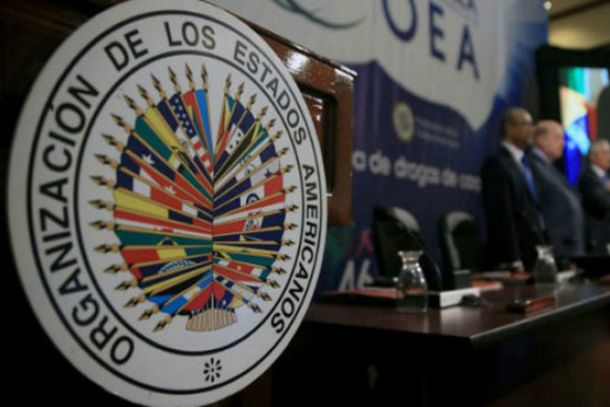
Last June 23, Venezuela lost for the first time in years, the vote at the Organization of American States (OAS) regarding an eventual application of the Democratic Chart.
The OAS General Secretary, Mr. Luis Almagro, holds that in Venezuela there is "an alteration to the constitutional order which is seriously affecting the democratic order". On the other hand, the government of Nicolas Maduro finds that such assertion is a clear and simple intereference to the national sovereign affairs: it is a "coup-de-etat".
The debate on the Democratic Chart was adjourned without a new date for resuming discussions on the agenda. Argentina has proposed the creation of the "OAS Group of Friends", supported by Almagro as a way for furthering dialogue in Venezuela. Such space is being spearheaded by three former presidents, sponsored by the Union of South American Nations (Unasur).
BREXIT: When leaving costs more than staying

Only a few can remember the historical endeavours made by the United Kingdom to become part of the European Union (EU).
In the construction of an integration process, there is a constant struggle between holding power or leaving it. Consequently, states are important and powerful actors when starting a negotiation, but as the process evolves, regional institution and transnational actors start playing an essential role.
The guarantee of Peace has always been a fundamental premise under which the EU has performed in order to achieve a harmonic coexistence in the continent.
For Italian leader Altiero Spinelli ( 1907 – 1986), one of the most known forefathers of the Union, the European Federation is the key which guarantees integration. The view of a “United States of Europe” finds its raison d'être in the writing of the Ventotene Declaration (1941), a text which was written during the second world war at the Isle of Ventotene, where he was imprisoned together with Ernesto Rossi, due to their opposition to Italian fascism. The text proposes the formation of a supranational European Federation, whose main purpose would be to join the European States to the point of preventing a new war.






 Europa in Movimento | Developed by